March Is Disability Awareness Month
Every March, I post to bring awareness to Cerebral Palsy, which is the disabling condition I live with. March has the distinction of bringing awareness to all disabilities, so I have chosen to write about that this year, though focused on something that not many outside the disabled community would be aware of.
While there is ongoing efforts at making the world more inclusive for people with visible and invisible disabilities, there is still so much work that needs to be done. As a reader, and an author, I am very aware of the lack of disabled characters in fiction.
I wrote an article for The Relatable Voice magazine’s March issue, addressing this specific topic. I’ve included the link in the title, so click on the purple letters and it will take you to the March issue. My article starts on page 12.
Without spoiling the article, I want to put some thoughts down for my readers to ponder. When you are reading fiction, regardless of genre, do you look for characters you can relate to? What is it that draws you into a book and holds your attention until the final page?
Ultimately, all authors want to engage their readers like that, but an entire community has been left on the outside looking in. I can only speak for myself in addressing specifics, so let me begin by saying, as a reader, I am able to engage in a well-written story and enjoy it immensely. However, it is very rare that I find a character with a disability in a novel, and if I do, then that character has obviously been created by an non-disabled author. Why do I say that? It is obvious when a supposedly disabled character is able to do something that for all intents and purposes they couldn’t do due to the nature of the disability that character is living with.
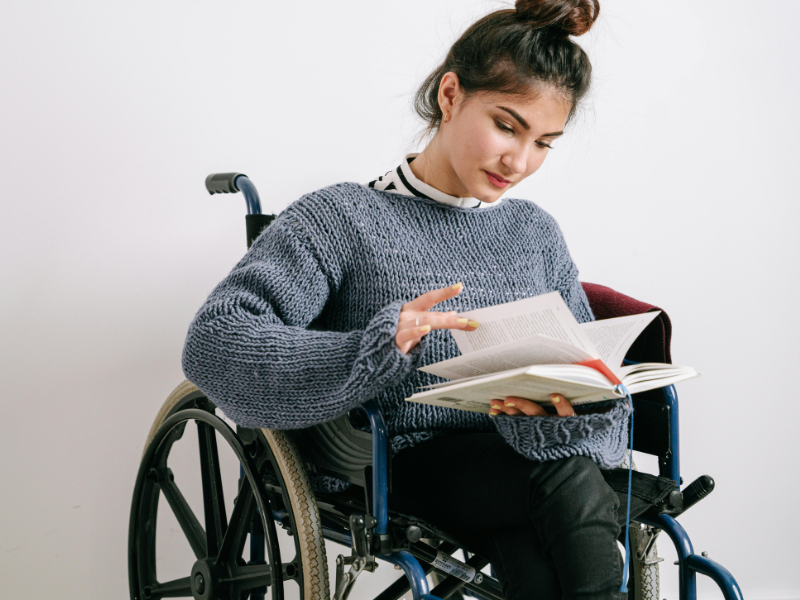
For example, a deaf person jumps when a horn sounds; a blind character is able to duck and avoid a low doorway; or a person in a wheelchair is able to use a regular bathroom stall. These are the little things that ring hugely false for those of us who live and interact in the world with our disabilities, and the obstacles and challenges we face because of it.
Allow me bring in another art form to illustrate. Think about movies that have had disabled characters as part of the main story line, but non-disabled people portraying those characters. For me, the obvious one is Forrest Gump who is played by Tom Hanks. Now, let me say that Tom did a really good job, but it still lacked an authenticity that only a disabled character can bring to the TV or movie screen.
The Good Doctor is a more modern series whose main character is a surgical resident who happens to have autism. It is fascinating to watch Freddie Highmore play Dr. Shaun Murphy, and do it with authenticity, vulnerability, and a sense of humour.
As an author who lives with Cerebral Palsy, I have purposely created a disabled character in my novel, Sister Lost. My main character is not disabled and her world gets turned upside down by a bequest in her grandmother’s will. This is the catalyst that sets Claire on a rollercoaster ride to find the truth. In the process she and her lawyer uncover a national tragedy involving how the disabled were segregated and treated in Canada from the late 1800s to the early 2000s. This is a historical fact and one that I knew was important to introduce in my novel.
I understand that may not be everyone’s cup of tea, but I would challenge you to give my book a read and see what you think. I have tried to eliminate the common stereotypes and give a glimpse into what it’s like to live with CP, including the effects of spasticity, chronic pain, and fatigue. I also address a few specific types of discrimination that I have encountered in my own life.
It would be wonderful to start a dialogue around the issues addressed in my novel and brainstorm ways to eliminate some of the social stigmas and barriers to education and employment. These two areas are only the tip of the iceberg, but it would be a good start. Let me know what you think in the comments below.